Roofers rely on tools that work as hard as they do, including fastening tools like nail guns and hammers, cutting tools such as utility knives and tin snips, and material handling tools like ladders, hoists, and roofing shovels. Proper safety equipment is also important, along with cleanup tools like brooms and magnetic sweepers.
Some tools get used on every job, while others save time when the crew moves fast. Knowing which ones matter most helps you stay efficient, avoid mistakes, and keep projects running smoothly. This guide gives you a roofing tools list with real names, prices, and advice to make smart purchases that protect your profit margin and your crew’s safety.
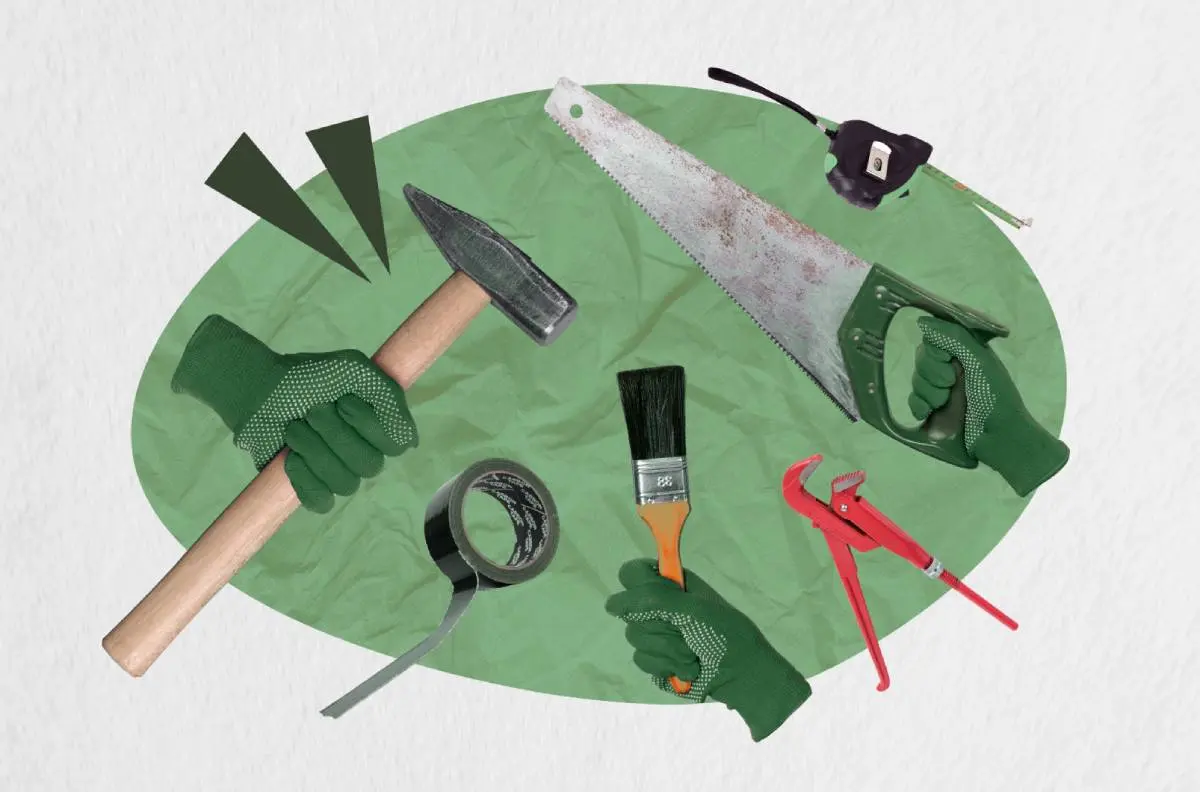
Hand tools remain one of the most dependable items in any roofer’s toolkit. When power fails or it’s early morning, you depend on these. Also, skimping here usually costs more in time or replacement later. Here is a table with roofing tools you’ll use on nearly every project.
| Tool | What to Look For | Typical Price |
| Roofing Hammer or Hatchet | Comfortable handle, sturdy head, nail puller, good balance | $35–$60 for good quality; high-end (European, specialty) $80–$100+ |
| Utility Knife with Spare Blades | Locking mechanisms, durable body, replacement blades | $10–$25 depending on brand and blade type |
| Tin or Metal Snips (Straight & Offset) | Hardened steel, comfortable grips, capable of doing metal flashing well | Around $25–$60 |
| Roofing Shovel or Tear-Off Shovel | Strong blade, durable shaft; balance between weight and durability | $50–$90 |
| Tape Measure | Tape with a durable blade that doesn’t kink easily | $15–$25 |
| Framing Square | A square that stays straight and holds its shape | $10–$20 |
| Chalk Line | Chalk that marks clean, stays visible, and reels smoothly | $10–$20 |
| Flat Bar / Pry Bar / Crowbar | Forged steel, thin edges for flashing work, comfortable grip | $15–$35 depending on size and brand |
| Caulk Gun / Sealant Gun | Drip-free mechanism, smooth trigger action, compatible with roofing sealants | $10–$25; heavy-duty models $25–$40 |
| Hammer Tacker or Cap Stapler | Jam-resistant feed, comfortable grip, reliable drive depth for underlayment | Hammer tacker: $25–$40; Cap stapler: $60–$120+ |
| Broom & Magnetic Nail Sweeper | Durable bristles, strong magnet, adjustable handle | Broom: $10–$20; Magnetic sweeper: $40–$100+ depending on strength and width |
| Roof Brackets / Roof Jacks | Heavy-gauge steel, secure locking, compatible with standard planks, rated for steep pitches | $10–$25 per bracket (varies by size and weight rating) |
In our detailed roofing tools list, power tools cost more up front, but when chosen well, they save a lot of money in labor and callbacks.
| Tool | Example with Price | What Drives the Price Up |
| Pneumatic Coil Roofing Nailer | DeWalt 1-3/4 in. 15° Pneumatic Coil Roofing Nailer: $209 Ridgid 15° Pneumatic Coil Roofing Nailer: $159 | Brand, build quality, how light it is, and ease of maintenance. Pneumatic nailers also require an air compressor, hoses, and fittings to operate. |
| Cordless Coil Roofing Nailer | Milwaukee M18 FUEL Coil Roofing Nailer: $429 Metabo HPT 18V MultiVolt Cordless Coil Roofing Nailer (NV1845DA): $399 | Battery system, voltage, battery included or not, and the durability of the battery |
| Hot Air, Membrane Welding, Heat Guns | Sievert DW-3000 Digital Hot Air Welder for TPO/PVC: $526 Leister TRIAC ST Hot Air Hand Tool: $450–$600 | Power capacity, brand, tip width, and durability |
| Circular Saw / Metal-Cutting Saw | 7-1/4″ circular saw (general-purpose): $100–$180 Metal-cutting abrasive circular saw/cutoff saw: $120–$350 | Motor power and amps (or brushless motor), build quality, bevel capacity, dust management, blade compatibility, and specialty features for metal cutting |
| Reciprocating Saw (for demolition) | Corded reciprocating saw: $80–$180 Cordless (bare tool) heavy-duty models: $150–$350 | Stroke length and speed, orbital action, power source (cordless brushless vs corded), vibration control, tool-free blade changes, and durability |
| Drill/Driver and/or Impact Driver | Cordless drill/driver (18V/20V brushless bare tool): $100–$200 Impact driver (brushless, bare): $90–$220 | Brushless motor, torque output, battery platform, build quality, clutch precision, integrated lights, and ergonomics |
| Screw Gun (for decking and/or metal roofing) | Dedicated screw gun (corded) for decking: $80–$200 Collated screw gun/auto-feed (cordless or corded): $150–$400 | Auto-feed/collated capability, adjustable depth settings, drive motor quality, screw length/type compatibility, ergonomics, and included accessories |
Safety should never be the section where you hope your guess was good. That’s why roofing safety equipment always takes a central place in any roofing tools list. Just like securing your roofing license (when required in your state), choosing proper safety gear is a non-negotiable.
Here are the main safety items roofers rely on for basic fall protection.
| Safety Gear | What It’s For |
| Full-Body Harness | Supports the worker and distributes force during a fall |
| Shock-Absorbing Lanyard | Reduces the impact if a fall happens |
| Roof Anchors | Acts as the secure point that connects your lifeline or lanyard to the structure |
| Lifeline | Gives controlled movement while keeping the roofer tied off |
| Connectors / Rope Grab / SRL | Makes sure basic PFAS components (harness, lanyard, anchor, and connectors) work together as one system. |
Guardrails, scaffolds, and other collective protections are also common and often preferred where feasible.
Complete kits are also available. These typically include everything in a single bundle and can be more cost-effective than buying each item separately.
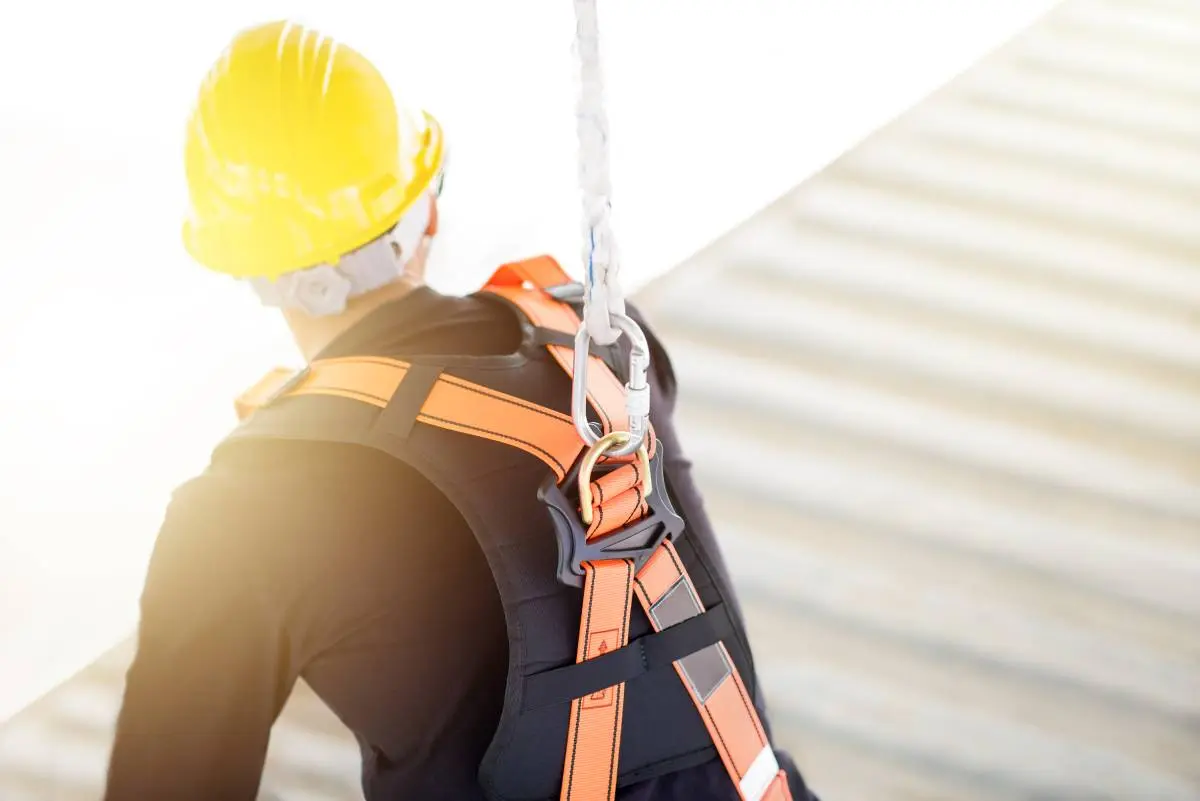
Keep in mind, you will also need ladders, ladder stabilizers, scaffolding, pump jacks, and roof brackets. This equipment is essential for getting on the roof safely and working efficiently.
While not physical tools, contractor software and technology affect your profit margins, schedule, and customer satisfaction. This is especially true if you offer roofing financing to make projects more accessible to clients. Most of these are subscriptions or one-time licenses with optional renewals, so pricing varies.
Learn more about the best business management tools for contractors in our blog post.
If you’re a roofer who mainly works with shingles but has a client asking about a TPO roofing membrane system, this checklist helps you show up ready.
| Tool/ Material | What It’s Used For | Typical Price Range |
| TPO Membrane Roll (45-mil, 60-mil, 80-mil thickness) | The main waterproof layer for a TPO roof that covers the deck and is welded at seams | $1.00–$2.50 per square foot |
| Handheld Hot Air Welder / Heat Gun | Used to weld seams of the TPO membrane and flashing around penetrations | $500–$700 for basic hand tools $3,000–$10,000 for premium/ semi-automatic units |
| Silicone or PTFE Seam Roller | Applies consistent pressure along welded seams to ensure bonding | $20–$100 |
| Seam Probe / Weld Tester | Checks the strength and uniformity of welded seams | $15–$40 |
| TPO Primer and Cleaner | Prepares surfaces for welding | $20–$40 per unit |
| TPO Flashing | Ensures all changes in geometry are sealed properly | $10–$30 |
| Utility Knife with a Hook | Cuts and trims membrane cleanly and safely | $10–$25 |
| Weighted Seam Roller | Helps ensure larger welded seams get even pressure and bonding | $80–$150 |
| Insulation and Cover Board | Provides thermal resistance and a stable substrate for the membrane | $0.50–$2.00 per square foot |
| Fasteners and Plates or Adhesives | Secure insulation and membrane in mechanical or adhered systems | $0.05–$0.25 per fastener/plate $1–$3 per square foot for adhesives |
| Edge Metal, Termination Bars | Finishes roof edges and secures membrane terminations | $2–$6 per linear foot |
| Walkway Pads | Protect high-traffic areas on the roof | $30–$60 per pad |
| Sealants / Pourable Sealers | Seal penetrations, drains, and transitions | $10–$50 per tube or unit |
| Vapor Barrier (where required) | Prevents moisture from migrating into the roof assembly | $0.50–$1.50 per square foot |
Note: Many small residential roofers do not own this gear and may be better off renting or subbing out.
In the roofing industry, roofers in the field consistently point to these brands as their go-to choice:
When going through your roofing tools list, keep these tips in mind:
When you follow a roofing tools list you can trust, you can plan your budget, bid your jobs more accurately, and avoid surprises. If you’re just starting a roofing company, strong hand tools, reliable safety gear, and efficient power tools are the foundation. They protect your crew, increase speed, and build your reputation.
When your truck shows up with the proper roofing tools and equipment ready, the client sees professionalism. Keep that standard, and you’ll stay ahead of the competition.
For a three-person crew with good basic hand tools, a mid-grade pneumatic nailer, and basic safety gear, expect to pay $2,000 to $4,000, depending on what you already own. That does not include compressors, ladders, scaffolding, or pump jacks. Also, adding cordless tools, advanced safety kits, or inspection technology increases the cost.
If you are doing many jobs in locations where power hoses are hard to manage, or if setup time costs you, cordless can pay off. When the price difference is several hundred dollars, you want to use the cordless enough to recoup that cost. Also factor in firing speed, tool weight over a full day, and how well the batteries perform in cold weather.
Basic hot air welders suitable for handwork, like patches or smaller membranes, run $500 to $700. For larger work with automatic feeding, wider seam nozzles, and more power, prices range from $3,000 to $10,000.
This depends on use. Make sure you inspect it before every use and replace lifelines and harnesses when you see signs of wear. Also, check the manufacturer’s guidelines.
Additionally, be sure to remove equipment from service after any fall arrest, even if no damage is visible.